

As labs become more digitally mature, many organizations are no longer looking for a single monolithic platform to run everything. Instead, they are building rich digital ecosystems, combining LIMS, ELNs, sample management tools, AI tools for everything from planning to analysis, and custom internal applications tailored to specific needs.
But this evolution has exposed a persistent challenge.
While the digital layer of the lab has become increasingly sophisticated, the physical lab remains fragmented. Instruments speak different languages. Automation systems operate in silos. Manual tasks are relied upon to stitch everything together. And translating digital intent into real-world execution still requires complex, fragile integrations.
This is where a powerful, and increasingly common, deployment model for Cellario OS™ comes into focus.
In many modern environments, Cellario OS is not used as the primary user-facing platform. Instead, it runs quietly in the background as the driver layer of the lab, acting as the operating system that bridges the physical world and the digital ecosystem through a single, unified API.
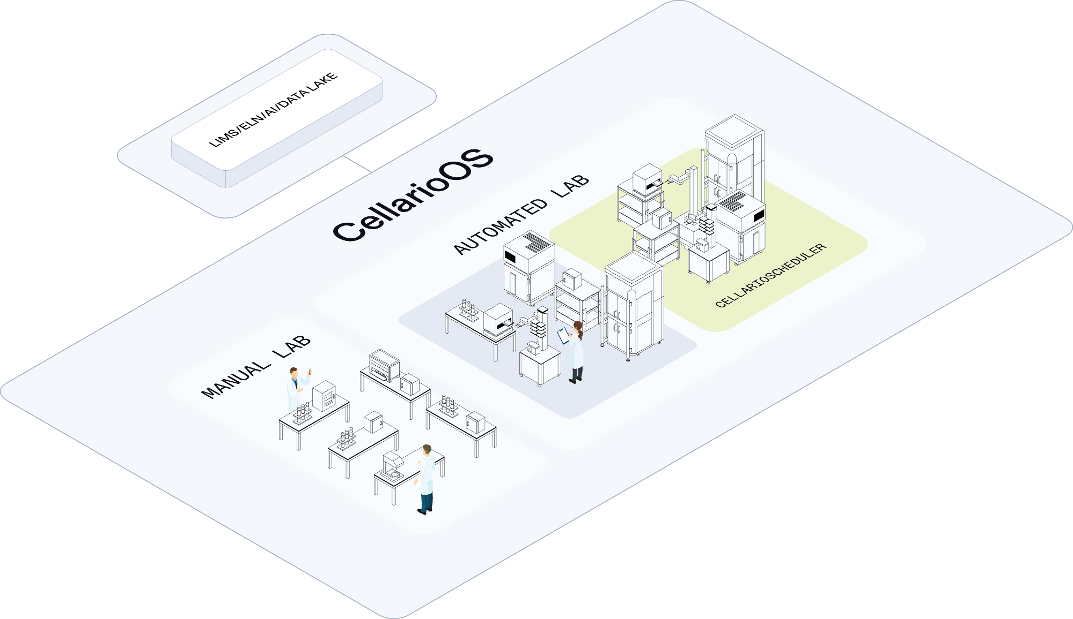
Figure 1. Cellario OS is the bridge to the fragmented world of the physical labs
Bridging Two Worlds That Don’t Naturally Connect
At its core, this model addresses a fundamental disconnect.
Digital systems excel at managing intent: designing experiments, tracking samples, coordinating teams, and capturing results. Physical lab environments, on the other hand, are about execution: moving plates, running assays, coordinating robotics, and interacting with complex instrumentation.
Connecting these two worlds is far from trivial.
Each device has its own communication protocols. Experimental workflows require precise sequencing and coordination, whether automated or manual or a mixture of both, as most experiments are. Execution must be tracked in real time, and the full context of what was planned versus what actually occurred must be preserved.
Cellario OS was designed specifically to solve these problems. When deployed as an integration layer, it effectively becomes the translation engine between digital intent and physical action.
HighRes has more than 20 years of experience in integrating devices. Whether this device is integrating to automation control software, or a wider part of the digital ecosystem, the challenges of control and data collection are largely the same. We are applying this expertise beyond automation to offer this universal integration layer to all operations in the lab.
Cellario OS understands how to communicate with instruments. It knows how to coordinate workflows across multiple devices. And it captures a complete record of execution, ensuring that every step, from initial request to final result, is traceable and accessible.
A Single API to the Physical Lab
One of the defining characteristics of this deployment model is that Cellario OS can operate entirely headless. That is to say, without the user interface.
Everything that can be done through the user interface can also be accessed programmatically through the API. This means organizations can choose to interact with the platform exclusively through their own digital tools, while Cellario OS manages execution behind the scenes.
In practice, this creates something labs have historically lacked: a single, standardized endpoint for interacting with the physical lab.
Instead of integrating separately with each instrument or automation system, digital applications communicate with one unified interface. The OS handles the complexity of device communication, scheduling, workflow orchestration, and data capture.
This dramatically reduces integration overhead while increasing reliability and scalability.
Where This Model Is Being Used Today
Organizations adopt a headless, driver-layer deployment of Cellario OS for several distinct but related reasons:
- Single integration layer to their established ecosystem
- A highly defined bridging layer from eLN or LIMS to the lab, with optional interaction through either software.
- Creating a fully programmable runtime environment of the lab.
The first scenario involves companies that have already invested heavily in their own digital platforms. These organizations may have proprietary experiment planning systems, internal workflow management tools, or AI-driven orchestration engines. Rather than replacing these systems, they use Cellario OS to provide a stable execution layer - a single point of control that connects their digital environment to the physical lab.
In the second scenario, Cellario OS serves as an integration hub between automation and enterprise lab systems such as LIMS, ELNs, and sample management platforms. Here, requests originate in familiar digital tools, flow into Cellario OS for execution, and then return with complete operational and results data. Lab personnel can monitor or intervene through the Cellario OS interface when needed, but the primary interaction remains within the broader digital ecosystem.
Finally, there is also a growing class of forward-looking organizations that are intentionally designing “headless lab” architectures from the ground up. In these environments, experimentation is increasingly driven by software, sometimes even by AI systems, and the physical lab must function as a programmable runtime environment. For these teams, Cellario OS becomes the foundational layer that makes fully automated, digitally orchestrated labs possible.
Integrating with the Modern Lab Ecosystem
The value of Cellario OS as an integration layer becomes most tangible when you look at how it connects with the specific tools that make up today’s digital lab. Whether the system in question is an ELN capturing experimental intent, a sample management platform tracking physical materials, an informatics pipeline processing results, or an AI tool planning the next experiment, Cellario OS provides the same consistent interface to the physical world. The following examples illustrate how this plays out across four of the most common integration categories.
Electronic Lab Notebooks – the Benchling example
Electronic lab notebooks such as Benchling are where scientists design, plan, and document their experiments. They are the system of record for experimental intent. The challenge has always been translating that intent into physical action: getting the right samples to the right instruments in the right order, and returning results that can be automatically linked back to the originating protocol.
With Cellario OS acting as the integration layer, a scientist working in Benchling can trigger a run directly from their notebook entry. The request travels via the Cellario OS API to the physical lab, where the OS manages scheduling, coordinates the required instruments and automation, and tracks every step of execution. When the run is complete, structured results data flows back into Benchling, automatically associated with the originating experiment. The scientist never needs to leave their ELN, in the lab, the operators can leverage Cellario OS for runtime experience, and the full execution record is preserved in Cellario OS for audit and traceability purposes.
This bidirectional integration eliminates the manual handoff that has traditionally existed between the digital and physical lab, reducing errors and accelerating turnaround times.
Video 1. Benchling integration to Cellario OS
Sample Management – the Cenevo Mosaic example
Sample management platforms are responsible for knowing where samples are, what their provenance is, and what has been done to them. Keeping that record accurate in a dynamic lab environment, where samples move between freezers, instruments, and workcells, has historically required significant manual effort or brittle point-to-point integrations.
Cellario OS closes this gap by acting as the authoritative record of what happened to a sample during execution. As samples move through automated or manual workflows, Cellario OS tracks their location, consumption, and transformation in real time. This data is exposed through the API so that sample management systems can maintain an accurate, up-to-date picture of the physical state of the lab without requiring separate integrations to each individual instrument or storage system. The result is a live, reliable chain of custody that spans the entire workflow.
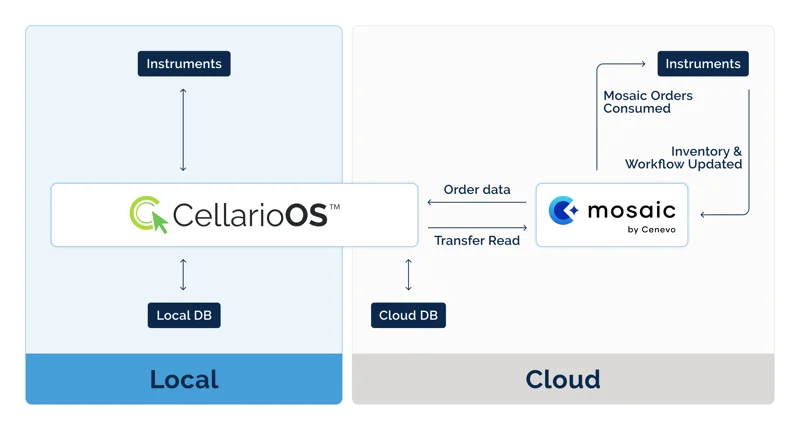
Figure 2. Cellario OS as an integration layer for Cenevo Mosaic
Informatics and Data Platforms
Informatics platforms, including scientific data management systems and analytical tools sit downstream of physical execution. They depend on receiving clean, structured, well-annotated data from the lab. In many organizations, that data arrives late, in inconsistent formats, or stripped of the execution context needed to interpret it correctly.
When Cellario OS is in place as the execution layer, it becomes a structured, queryable source of operational and results data. Informatics platforms can pull data directly from the Cellario OS API, receiving not just the raw output of instruments but the full context of how an experiment was run: what was scheduled, what was executed, what deviations occurred, and what the final results were. This dramatically improves data quality downstream and shortens the time from experiment completion to analytical insight.
AI Tools and Autonomous Experimentation
Perhaps the most forward-looking integration category is AI-driven experimentation. Organizations are increasingly deploying AI systems that analyze incoming data, generate hypotheses, design follow-on experiments, and submit them for execution, all with minimal human intervention. For this model to work, the AI system needs a reliable, programmatic interface to the physical lab.
Cellario OS provides exactly that. Because the platform is fully API-accessible and can operates headless, an AI orchestration tool can submit experiment requests, monitor execution status, and retrieve results in a structured, machine-readable form, all without any human in the loop. The OS handles the complexity of translating high-level experimental intent into precise, device-level execution, absorbing the variability of real-world lab conditions so that the AI system can focus on what it does best: identifying patterns and designing better experiments.
As AI-driven lab automation matures from concept to mainstream practice, having a robust, standardized execution layer will be a prerequisite, not an option. Cellario OS is designed to be that layer.
The Value of Deep Device and Systems Expertise
A key reason this approach works is the depth of expertise required to reliably control and coordinate complex lab environments.
HighRes has spent decades developing drivers, automation frameworks, and orchestration capabilities across a vast range of instruments and robotics platforms. Today, Cellario OS ships with more than 500 instrument and device drivers, one of the largest libraries of its kind in the industry covering everything from liquid handlers and plate readers to storage systems and robotic arms (download our driver library here). This knowledge is embedded directly into Cellario OS.
As a result, organizations using the platform as a driver layer are not simply gaining an API. They are gaining access to a mature, highly specialized foundation for communicating with devices, coordinating workflows, and managing execution at scale.
Equally important is the Cellario OS’ ability to capture and correlate the full context of lab operations. It records the intended experimental design, tracks what actually occurred during execution, and aggregates resulting data into a cohesive, accessible record. This creates a reliable system of truth that digital tools can depend on.
Built for Developers and Integration at Scale
The success of headless deployments also depends heavily on the strength of developer tooling. The Cellario platform has been developed API first. Cellario OS itself provides comprehensive, Swagger-documented APIs along with extensive integration support, making it possible for teams to build robust, long-term solutions on top of the platform.
These capabilities are already proven in real-world integrations with leading digital lab platforms such as Benchling, Genedata, Scigilian, and Cenevo, as well as numerous custom-built internal systems. In each case, Cellario OS functions as the consistent, reliable layer that connects these digital environments to physical automation.
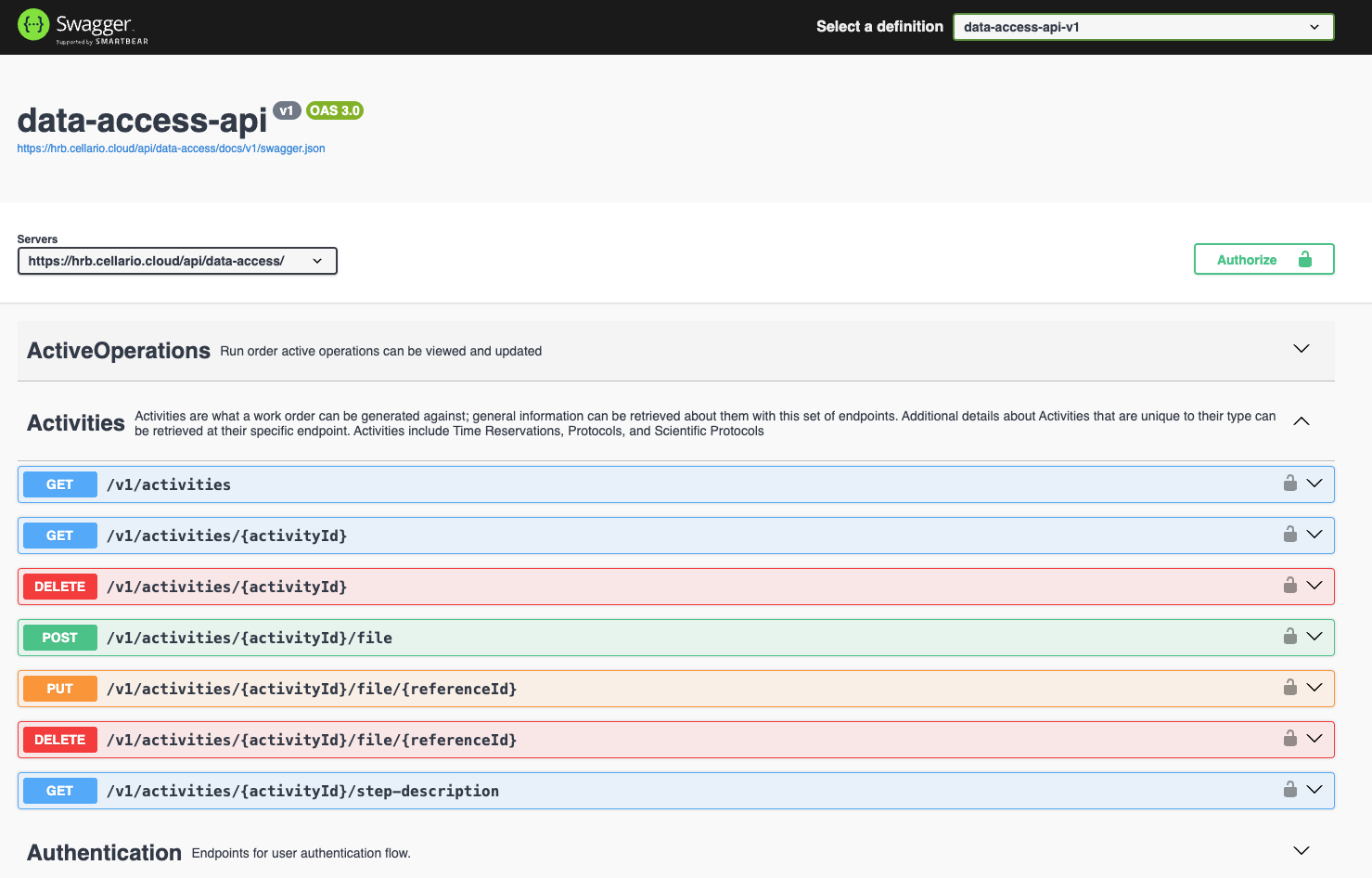
Figure 3. Swagger documentation for the Cellario OS API
Why This Architecture Is Becoming Essential
Several broader industry trends are accelerating the adoption of this model.
Labs are becoming increasingly software-defined. AI-driven experimentation is placing greater demands on automation systems. Organizations are seeking vendor-agnostic architectures that allow them to evolve their digital ecosystems without being locked into a single platform. And as automation scales across sites, the need for standardized interfaces becomes even more critical.
In this context, having a dedicated operating system for the physical lab, one that provides a stable abstraction layer and a single API is no longer a luxury. It is becoming a foundational requirement.
The Invisible Backbone of the Connected Lab
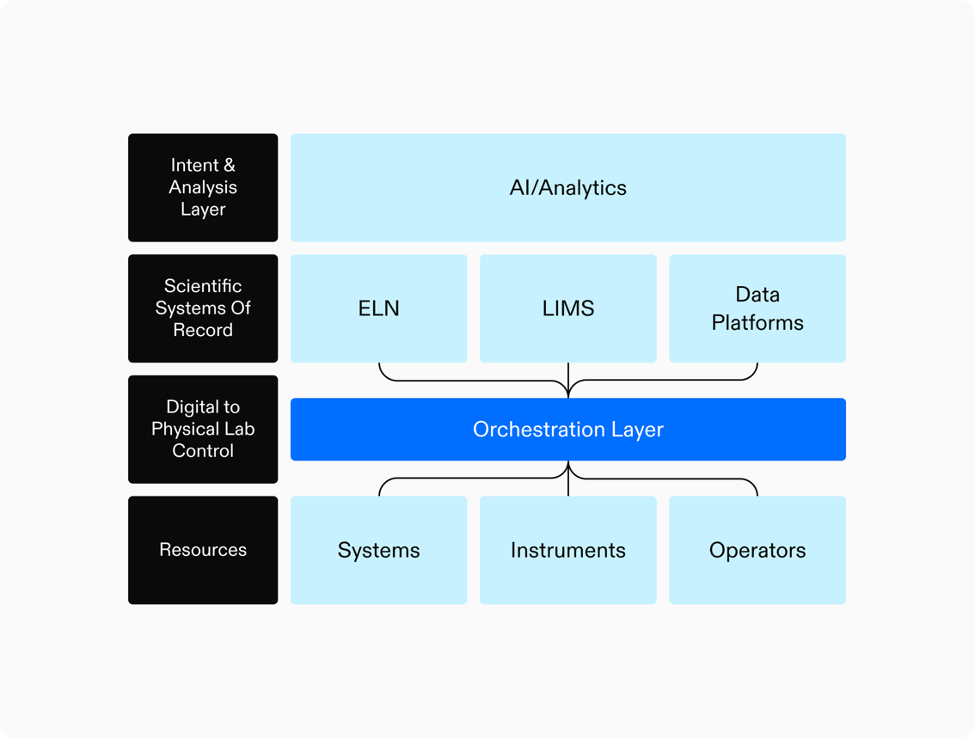
Figure 4. Cellario OS as the Universal operating layer to integrate between the physical lab and the digital ecosystem
Cellario OS is often recognized for its role in powering fully integrated automation environments. Yet in many modern deployments, its most strategic contribution is less visible.
Running solely as an integration layer, it serves as the invisible backbone of the lab - the driver layer that connects instruments, coordinates workflows, captures execution data, and exposes everything through a unified interface.
By separating physical execution from digital innovation, this architecture gives organizations the freedom to build the lab environments they truly need, while ensuring that the complex realities of automation remain reliably under control.
And as labs continue their transformation into fully connected, software-defined environments, that role will only become more central.